

Service: Precision Swiss Turning & CNC Machining
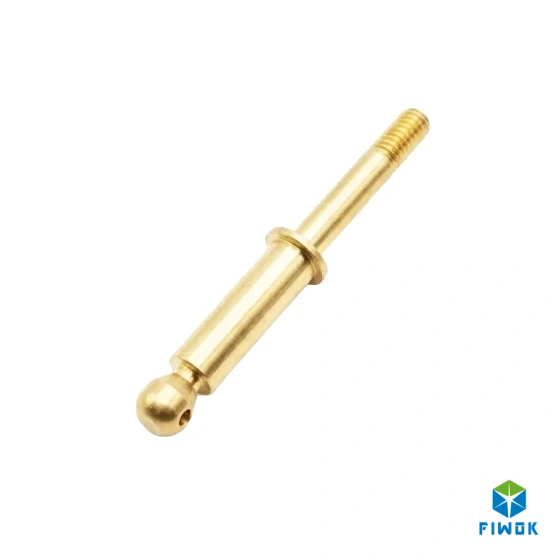
Part Type: Threaded Electrode / Conductive Stud
Material: Premium Pure Copper (C11000 / T2 / Tellurium Copper)
Process: Swiss Turning + Precision Threading
Tolerance: ±0.01mm
Surface: Burr-free / Anti-oxidation Treatment Optional
MOQ: 1PCS (Prototyping) to Small-Medium-High Batch
Lead Time: 5-20 Days
Fiwok provides high-precision Swiss-type CNC machining for C11000 / T2 pure copper components. These threaded electrodes feature high-accuracy pitch control and a clean, oxidation-free surface finish. Specialized for electrical conductivity and heat dissipation, we achieve ±0.01mm tolerances for complex geometries. Ideal for high-end power electronics, welding systems, and custom connector hardware in small-to-medium batches.
Precision Swiss Machined Pure Copper Threaded Electrode Stud with Polished Surface
Custom Precision Swiss Machined Copper Threaded Electrodes

At Fiwok, we specialize in the high-precision manufacturing of electrical contact components, focusing on pure copper (C11000/T2) and specialized copper alloys. Our Swiss-type CNC machining capabilities produce complex, slender, and threaded conductive studs with unmatched dimensional stability.
Technical Specifications (Factual Evidence)
- Material: Pure Copper (C11000 / T2) | Tellurium Copper (C14500)
- Precision: Dimensional tolerance up to ±0.01mm
- Machining: Swiss-type turning for high L/D ratio stability
- Finish: Ra 0.8 | Burr-free threading | Anti-oxidation available
- Equipment: Mazak & Citizen Swiss-Type CNC Lathes
Why Fiwok for Copper Machining?
1. Optimized Tooling for "Soft" Metals: Pure copper is notoriously "sticky." Fiwok utilizes specialized polished carbide tooling and high-pressure cooling to prevent thread tearing.
2. High-Mix Low-Volume (HMLV): We are optimized for rapid setup, delivering 1 to 500+ pieces with aerospace-level precision for custom engineering needs.
Q: How does Fiwok ensure the perpendicularity of the threaded rod?
A: Using Swiss-type lathes, we machine the diameter and threads in a single clamping session, eliminating cumulative errors and ensuring perfect axial alignment.