Surface Finishing
Official Engineering Briefing | Custom Surface Finishing & Post-Processing
FIWOK METALWORKS provides professional surface finishing services for custom machined parts to optimize aesthetic appearance, corrosion protection, mechanical wear resistance, and electrical conductivity for long-term industrial deployment. Operating directly from our Shenzhen manufacturing facility with 14+ years of industrial precision expertise (Since 2012), we comprehensively support high-precision post-processing finishing across our high-speed 5 axis CNC machining configurations, advanced CNC turning production lines, and ultra-precision Swiss sliding headstock cells with 100% global material source traceability backed by authentic mill test certificates. Accuracy is determined entirely by product blueprints: manufacturing parameters are controlled strictly to your drawing requirements, supporting tight linear tolerances down to +/-0.005mm based on specific component features. Our facility strictly handles Build-to-Print custom contract manufacturing loops; no product development or proprietary design modification services are conducted.
Surface Finishing Services for Custom Metal & Plastic Parts
Anodizing • Polishing • Bead Blasting • Plating • Black Oxide • Passivation. We optimize custom hardware parameters across all capabilities matching global material traceability.
● MOQ 1 Supported
● Full Electrochemical Continuity
● Drawing-Based Review
| Item Criterion |
FIWOK Factory Processing Capabilities |
| Corrosion Protection |
Advanced shielding defense layers optimized for premium aluminum, carbon steel, and stainless steel alloys to safely withstand harsh operational marine or chemical environments. |
| Appearance Options |
Flexible engineering finishes including uniform industrial matte, fine glossy reflective, architectural brushed, and high-end decorative custom coloring matching logo criteria. |
| Engineering Support |
Data-driven custom finish selection verified dynamically by specific application demands, blueprint dimensional tolerance baselines, and recurring volume cost expectations. |
Surface Finish Samples Gallery
Real manufacturing sample images help global procurement managers quickly inspect the physical visual appearance and engineering application of each surface treatment method.
As Machined
Standard machined finish with visible tool marks. Suitable for functional prototypes, internal structural components, and cost-sensitive parts.
|
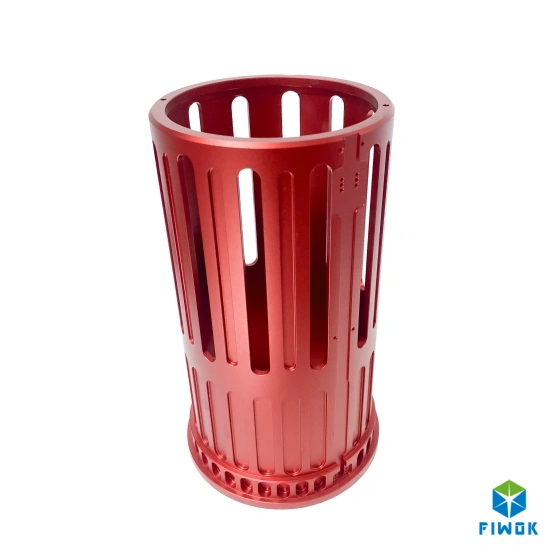
Anodizing
Corrosion-resistant protective decorative layer common for aluminum electronics chassis, communication hardware housings, and aerospace brackets.
|
Polishing
Ultra-smooth mirror-like compound polishing utilized for moving mechanical sealing tracks, optoelectronic adjustment blocks, and premium outer hardware.
|
Bead Blasting
Creates a perfectly uniform satin matte industrial appearance, effectively eliminating concentric tool marks and minor scratches prior to final anodizing.
|
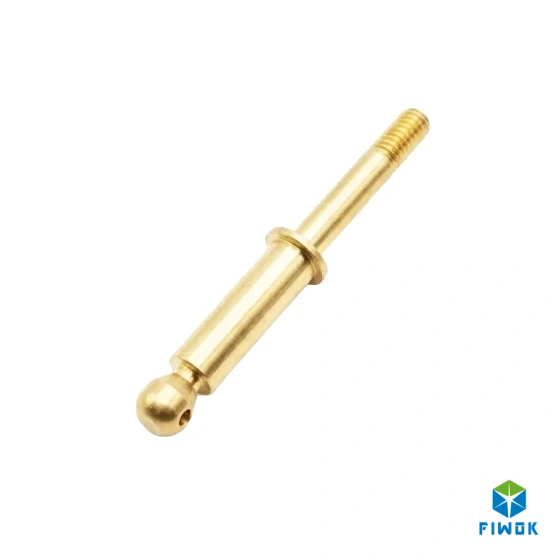
Plating
Industrial nickel, yellow zinc, or chrome plating. Maximizes electrochemical anti-corrosion defense boundaries, electrical conductivity paths, and fatigue traits.
|
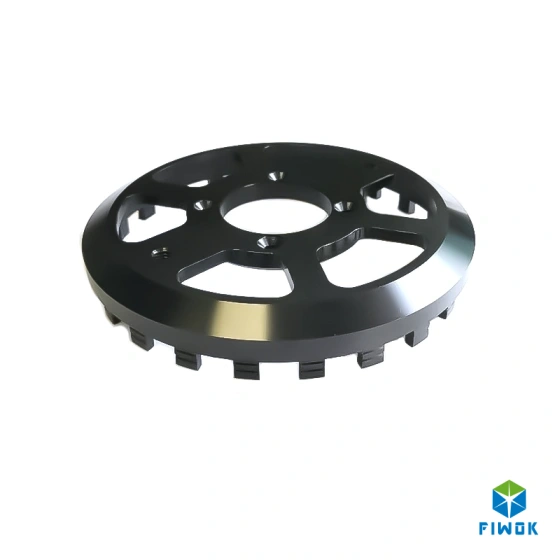
Black Oxide
Chemical conversion treatment improving wear resistance and fatigue borders for steel automation elements, heavy rivets, and rotating shafts.
|
Why Surface Finishing Matters
Appearance Improvement
Surface finishing can create a matte, glossy, brushed, or decorative appearance to meet industrial branding and optoelectronic hardware presentation requirements.
|
Corrosion Resistance
Chemical treatments including hard anodizing, passivation, and specialized protective plating safely protect metal hardware elements deployed within saline or humid environments.
|
Functional Performance
Optimizes critical engineering sub-traits: improves fatigue thresholds, material hardness thresholds, low-friction alignment properties, and multi-component contact conductivity.
|
Technical Recommendation
Our production managers evaluate blueprint metrics to suggest the matching finishing layer configuration based on material constraints, mating tolerances, and cost parameters.
|
How to Choose the Right Surface Finish
When to Use As Machined
Recommended exclusively for raw prototype verification loops, unexposed internal sub-blocks, and structural machinery supports where aesthetic markings carry zero commercial penalties.
|
When to Use Anodizing
Deploy decorative Type II or heavy hardcoat Type III anodizing when aluminum components require an aggressive anti-wear defense crust, precise electrical insulation parameters, or uniform branding coloring.
|
When to Use Polishing
Precision hand or batch barrel polishing is recommended for sub-micron dynamic gas/fluid sealing interfaces, medical instrument enclosures, and customer-facing components requiring specular gloss metrics.
|
When to Use Bead Blasting
Select fine glass bead blasting configurations to remove machining path reflections, uniform macro surface roughness values, and generate an elegant glare-free matte layout profile before anodizing steps.
|
When to Use Plating
Ideal for non-conductive baseline metals requiring an electroless nickel coating or gold plating grid to achieve superior solderability paths, micro-contacts lifecycle expansion, or extreme environmental defense.
|
When to Use Black Oxide
Specify hot black chemical treatments for high-tensile steel machinery gears and custom fasteners to absorb anti-rust lubricants without triggering any layer dimensional thickness build-up.
|
Materials Suitable for Surface Finishing
The appropriate chemical or mechanical finishing configuration depends squarely on both the base alloy substrate properties and your blueprint application metrics.
| Base Material |
Applicable Finishing Solutions |
| Aluminum Substrates |
Highly receptive to clear/color architectural anodizing, hardcoat anodizing, microscopic bead blasting texturing, bright compound hand polishing, and industrial plating loops. |
| Stainless Steel |
Optimized for dynamic electropolishing, clean acid chemical passivation processes (fully ASTM compliant), mechanical satin brushing, and protective non-stick custom coatings. |
| Carbon & Tool Steel |
Commonly finished via hot black oxide treatments, zinc phosphating, industrial electroless nickel deposition plating, or specialized anti-friction spray boundaries. |
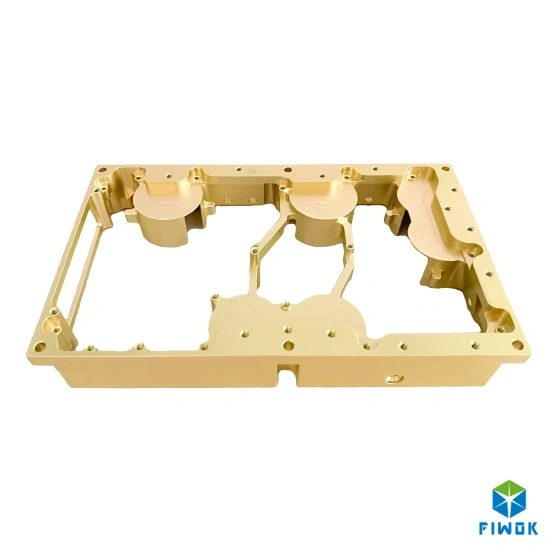
| Brass & Pure Copper |
Mechanically mirror polished, gold/silver electrolytic plated to reinforce micro terminals conductivity, or passivated to thwart atmospheric oxidation tarnish. |
| Titanium Grade 5 |
Can be colored via specialized plasma anodizing setups, chemically etched, or highly polished to preserve strict biomedical compatibility profiles. |
| Engineering Polymers |
High-performance components (PEEK, POM Delrin, Nylon) are left entirely as machined or meticulously hand deburred and gas vapor polished depending on fluid function. |
| Selection Criterion |
Engineering Assessment Approach |
| By Material substrate |
Different substrates accept varying chemical conversion pathways. For instance, electrochemical anodizing is engineered strictly for aluminum, whereas acid passivation rules apply solely to stainless steel alloys. |
| By Operational Function |
If your custom parts require rigorous saltwater corrosion blockades, localized multi-axis fatigue mitigation, electrical insulation grids, or high precision moving sealing contacts, the final coat thickness is precision modeled. |
| By Aesthetic Targets |
For visible consumer facing interfaces, premium smart device enclosures, or zero reflection optical beam path components, macro visual criteria function as the primary process routing rule. |
| By Blueprint Tolerance |
Certain chemical layers generate structural thickness additions. Accuracy is determined explicitly by blueprints: precision is controlled strictly to your drawing requirements, supporting tight linear tolerances down to +/-0.005mm based on component features. |
Surface Finishing FAQ
Q: What surface finishing services do you offer?
We offer industrial decorative/hardcoat anodizing, diamond polishing, automated glass bead blasting, precise multi-substrate metal plating, black oxide conversion, chemical passivation, and standard as-machined clean options for global hardware components.
|
Q: Does surface finishing affect tolerances?
Yes. Heavy electrochemical plating and anodizing build micro dimensional layer thickness on mating profiles. Our manufacturing tolerance parameters are controlled strictly to your drawing requirements, supporting tight linear tolerances down to +/-0.005mm.
|
Q: What materials can be surface finished?
We support advanced post-processing finishing configurations for high-grade aircraft aluminum, stainless steel varieties, carbon steel alloys, tool steels, free-cutting brass, pure copper contacts, Grade 5 Titanium, and advanced polymers.
|
Q: Can you provide finishing for CNC machined parts only?
Finishing channels are optimized primarily for CNC components, weaving structural anti-corrosion armor across customized 5 axis CNC machining block configurations, automatic lathe hardware, and sliding headstock Swiss turned parts.
|
Q: How do I choose the right surface finish?
The finest post-processing coat path choice is derived directly from base metal substrate behaviors, environmental function factors, final assembly aesthetic targets, and operational anti-wear thresholds.
|
Q: Can you recommend a finishing method based on drawings?
Absolutely. Our production engineering team systematically audits incoming 2D PDF blueprints and 3D solid models to recommend the matching post-treatment thickness layout, factoring in custom cycle economics.
|
Related Precision Manufacturing Services
If your engineering project requires advanced vertical prism milling, automated continuous bar lathe operations, or specialized multi-axis toolpaths:
Upload Your Drawings for a Surface Finishing Quote
Send us your 2D PDF blueprints or 3D solid models (STEP, STP, IGS) for custom finished hardware, including stepped shafts, precision spacer bushings, dowel pins, threaded fittings, and signal connectors.
● MOQ 1 Supported ● Mass Turn-Feeder Cost Advantage ● Strict Burr Control
Direct Engineering Channel: [email protected]
Mail consultation
Please feel free to give your inquiry in the form below.